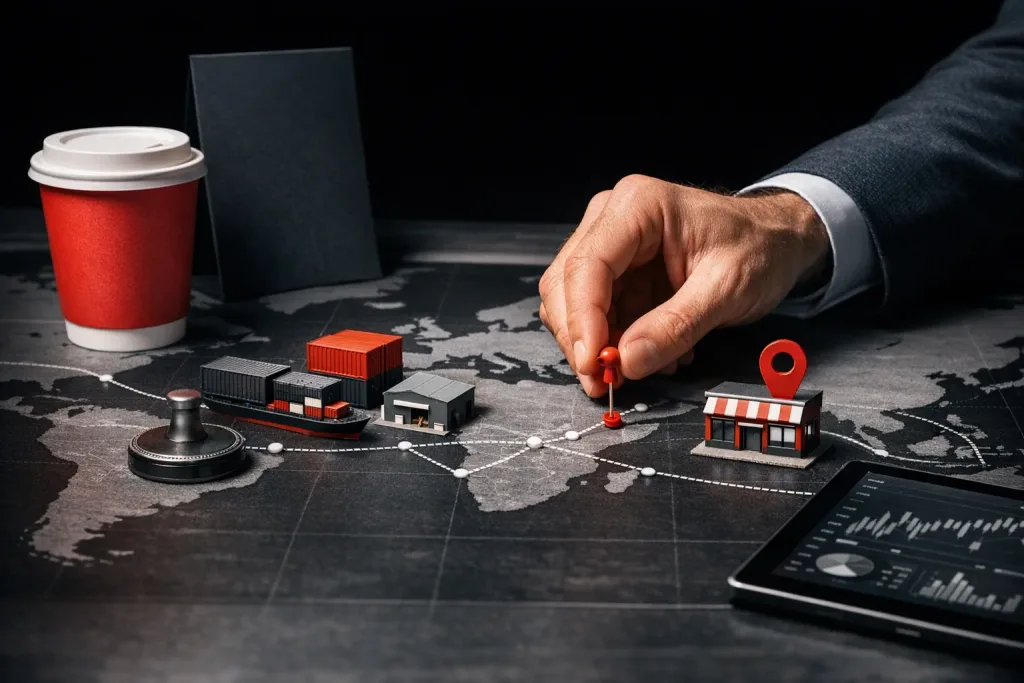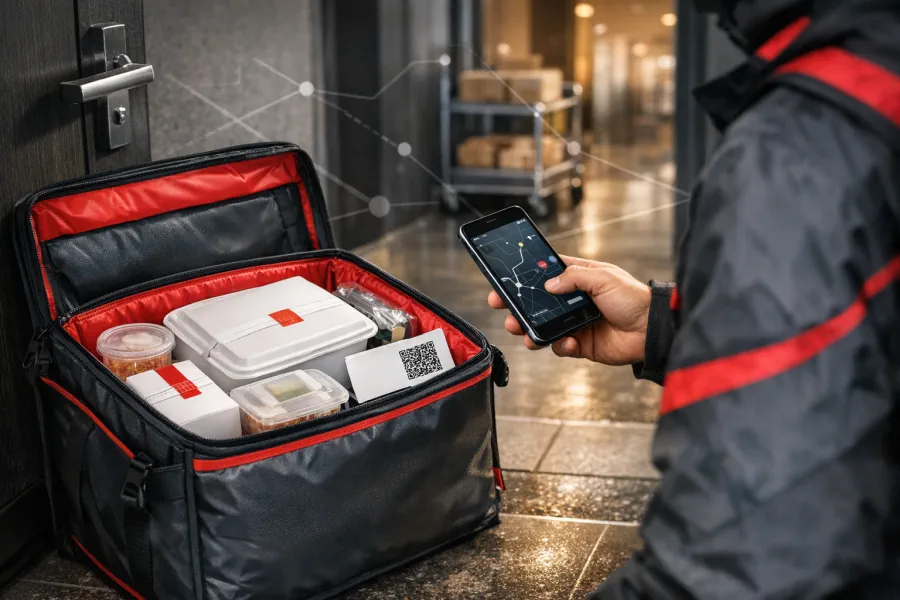
If there is one touchpoint that can destroy the whole business if faulty or defective, it is the delivery. Delivery is the most sensitive point of a supply chain; it is the cornerstone of a resilient supply chain. It is the reason for the whole production process to exist; that is, to deliver the goods to the customer. In this context, the Last-Mile Delivery refers to the final stage in the delivery process – that is, the process that takes the product from the last hub to where the customer is. Yes, that’s right, as customers, what we know of the delivery system is this very last stage – from the inventory, the hub, the warehouse, or wherever the product is, to our homes; and this is exactly what is referred to as the ‘last mile’. However, as the products have several journeys during their production process, this last stage is called the last-mile delivery.
The Last-Mile Challenge in F&B: Why Innovation is Mandatory
As much as it is significant, last-mile delivery is also a challenging task to manage. There are challenges with routing and cost optimization, delivery tracking, logistics challenges, and perishability risks; and to face them, companies must come up with innovative ideas. Therefore, innovative ideas in optimization, real-time tracking, micro-fulfilment, and dynamic pricing have all come to help meet the challenges.
Reconciling Speed and Cost (the 50% Problem)
In the last mile food and beverage delivery, speed and cost are always at odds; faster delivery means higher costs while less cost means slower delivery, which will in turn drive customer dissatisfaction. Customers usually expect a fast delivery of their orders – usually in less than 30 minutes – but margins are thin in F&B and logistics can account for 50% of the total order value – hence, the “50% problem.” Speeding up delivery typically requires more riders, smaller delivery radiuses, idle capacity buffers, and premium last-mile services, all of which adds to costs. On the other hand, tightening up the budget often leads to slow delivery and customer dissatisfaction.
In order to get rid of this trade-off between speed and time, companies must utilize strategic innovation to reconcile these two opposing ends, rather than choosing one of them. Through demand clustering, micro-fulfilment hubs, and intelligent batching, companies manage to preserve delivery times while improving rider utilization. Besides, dynamic pricing and delivery fees help shift demand toward off-peak windows.
Nevertheless, none of this is possible without technology. AI-driven routing, real-time demand forecasting, and predictive prep timing allow operators to manage the balance of kitchens, couriers, and customers. Ultimately, solving the 50% problem requires an out-of-the-box thinking which redesigns the last-mile operating model to deliver just “fast enough” to maintain satisfaction while slowing down or speeding up where necessary so that speed becomes an optimum part of the process rather than being a cost burden.
Managing Perishability and product integrity
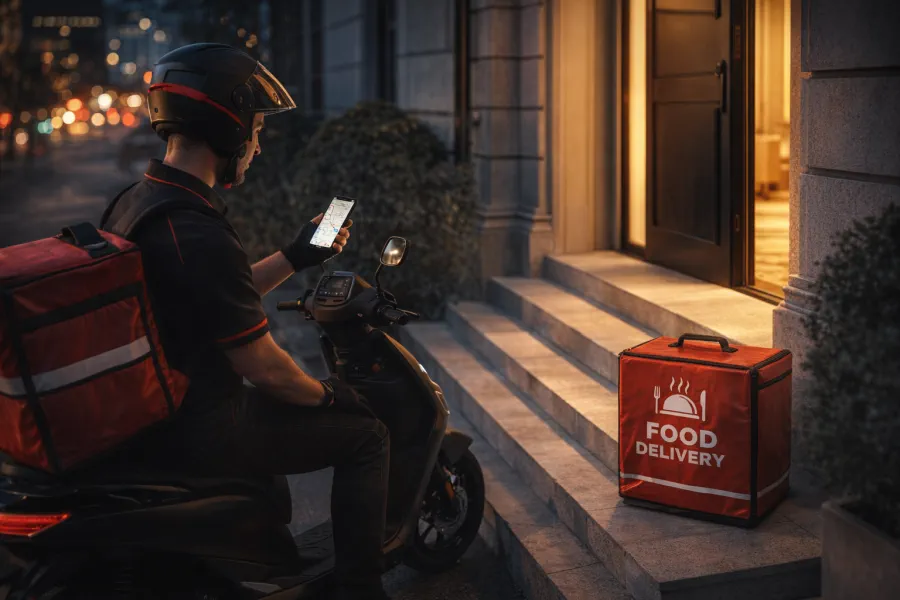
Delivering perishable products has its own sensitivities; no one is going to be happy with their refrigerator-cold hamburger when it arrives at their doorstep! Therefore, product integrity is of utmost importance in F&B. To meet these challenges, companies usually use techniques to maintain control during the last mile of their delivery. Through using innovative solutions such as smart ways to maintain the temperature of the box containing the product, smart delivery planning, enhanced coordination and organization among team members, and through the optimization of the routes, companies try to improve the delivery system and maintain the product’s integrity. Needless to say, none of this is possible without the use of smart and advanced technology and AI-powered systems.
Meeting the Demand for Instant and Same-Day Delivery
Instant and same-day delivery is no longer only a competitive advantage, it is vital. Customers put almost as much value on immediate delivery as product quality, driving last-mile delivery operators towards the edge, where they are eventually pushed for minutes, rather than hours.
Meeting this expectation requires rethinking proximity and preparedness. Successful operators move inventory and production closer to the customer through dark kitchens, micro-fulfillment centers, and localized store networks. Other innovative ways also come handy; predictive demand planning, for instance, helps operators pre-position high-demand items and ingredients during peak times, greatly reducing preparation times.
However, speed is not the only factor. Consumers are looking for consistency and reliability, and that’s why brands are using real-time order tracking, transparent delivery windows, and proactive communication to enhance the delivery service and gain consumer trust through reduced wait times.
Technological Pillars of F&B Last-Mile Innovation
Companies are resorting to innovative solutions to enhance the delivery service and reduce wait times. However, from simpler, more physical solutions like micro-fulfilment and crowdsourcing, to more advanced, digital methods such as AI-powered route optimization and drone delivery, all innovation heavily depends on technology. Therefore, investment in technology is crucially important for the enhancement of last-mile delivery. Let’s take a look at the three technological pillars of a successful last-mile delivery.
AI-Powered Optimization and Predictive Planning
With its endless potentials to transform the way any business is conducted, AI has also entered the last mile delivery of food and beverages, helping the operators manage the numerous challenges in an optimum way. AI is now used for route optimization, where it analyzes traffic patterns, directions to the location, vehicle capacity, and weather conditions to optimize delivery routes. Such optimization will reduce wait time as well as fuel consumption, which will in turn lead to cost efficiency.
Apart from analyzing the real-time details, AI also analyzes historical data, including past traffic information, weather conditions, and customer preferences. Running such comprehensive analytics will help operators have predictive planning and manage all factors in an optimum way.
The Rise of Autonomous and Alternative Delivery Modes
As costs continue to put pressure on F&B companies, autonomous delivery models are emerging as a differentiating factor and a more cost-efficient alternative for human-led vehicles. While traditional modes of delivery are constrained by labor cost, labor shortage, and regulatory limits, these alternative models offer perks which are encouraging operators to use them in their last mile delivery service.
Autonomous delivery robots, sidewalk rovers, and self-driving vehicles are increasingly deployed in dense urban areas, campuses, and controlled environments where routes are predictable and order volumes are consistent. These alternative models offer lower variable costs per delivery and they can operate for longer hours – factors which improve asset utilization.
Data Transparency and Real-Time Tracking
In last-mile delivery, data transparency and real-time tracking are becoming essential for both the customer and the operators. As delivery windows shrink, even a slight delay could result in customer dissatisfaction, damaging their trust. However, it will help a lot when the customer knows where exactly their product is at the moment. Therefore, and in this way, the product delivery has an end-to-end visibility across the entire order lifecycle – the customer has real-time access to the order information from the moment it is being prepared, to when the courier receives it, and finally when it arrives at their doorstep.
Transparency is valuable for the operators, as well. It will allow them to detect deficiencies and locate bottlenecks during the process.
Strategic Operating Models Redefining the F&B Network
Traditional centralized distribution models are proving inadequate for the speed, flexibility, and cost discipline required in modern last-mile F&B delivery. In response, brands are redesigning their operating networks around proximity, modularity, and collaboration. These strategic operating models prioritize being closer to demand, sharing capacity, and flexing infrastructure in real time. By rethinking where food is prepared, stored, and dispatched, F&B operators can simultaneously improve delivery speed, control unit economics, and adapt to volatile demand patterns – laying the foundation for scalable and resilient last-mile ecosystems.
Micro-Fulfilment Centers (MFCs) and Hyperlocal Strategy
Micro-fulfilment centers enable F&B brands to move inventory, preparation, and assembly closer to high-density demand zones. Located within urban neighborhoods, MFCs reduce delivery distances, shorten lead times, and lower last-mile costs. A hyperlocal strategy also improves demand responsiveness, allowing operators to tailor assortments, menus, and pricing to neighborhood preferences. By serving smaller catchment areas, MFCs support faster delivery without relying on excessive courier capacity. When integrated with demand forecasting and real-time inventory systems, they become powerful nodes for balancing speed, cost, and service consistency across the network.
The Ghost Kitchen / Cloud Kitchen Ecosystems
Ghost and cloud kitchens decouple food production from traditional storefronts, enabling F&B brands to scale rapidly with lower capital investment. These kitchens are optimized for delivery-first operations, supporting multiple brands or menus from a single location. Their flexibility allows operators to test concepts, enter new markets, and adjust capacity based on real-time demand. When clustered strategically, cloud kitchens reduce delivery radiuses and improve utilization. As ecosystems mature, shared infrastructure, data platforms, and logistics partnerships further enhance efficiency, making ghost kitchens a cornerstone of modern last-mile F&B strategies.
Collaborative and Crowdsourced Networks
Collaboration is emerging as a critical lever in last-mile optimization. Crowdsourced delivery fleets, shared kitchen spaces, and third-party logistics partnerships allow F&B brands to flex capacity without bearing fully fixed costs. By pooling demand across multiple operators, collaborative networks improve rider utilization and reduce idle time. Data sharing and standardized service levels are key to making these models work at scale. While they require strong governance, collaborative networks increase resilience during demand spikes and labor shortages, transforming last-mile delivery from a standalone function into a shared ecosystem advantage.
Driving Customer Loyalty and Sustainability Through Innovation
Innovation in last-mile delivery is no longer just operational – it directly shapes brand perception, loyalty, and sustainability credentials. Customers increasingly reward brands that offer convenience, transparency, and responsible practices. By embedding personalization and sustainability into delivery models, F&B operators can deepen emotional engagement while aligning with long-term environmental and social expectations. These innovations turn last-mile operation into a strategic tool for differentiation, trust-building, and lifetime value growth.
Personalization and Customer Choice
Personalization transforms last-mile delivery from a transaction into a tailored experience. Data-driven insights enable brands to offer flexible delivery windows, preferred couriers, customized packaging options, and dynamic menu recommendations based on location and time of day. Giving customers choice – such as paying less for slower delivery or opting for bundled orders – helps balance speed expectations with cost efficiency. Personalization also strengthens loyalty by making customers feel understood and in control, while simultaneously driving the company’s behavior towards more operationally efficient and sustainable delivery patterns.
Eco-Friendly Delivery Practices
Sustainability is becoming a decisive factor in delivery innovation. Eco-friendly practices such as electric vehicles, bike deliveries, recyclable packaging, and optimized routing reduce environmental impacts while often lowering long-term costs. Some brands empower customers to choose greener delivery options or consolidate orders, reinforcing shared responsibility. Transparency around emissions and sustainability metrics further builds trust. By embedding sustainability into last-mile design rather than treating it as an add-on, F&B brands can meet regulatory pressure, consumer expectations, and cost objectives simultaneously.
Conclusion: Future-Proofing F&B Delivery
Last-mile delivery trends are rapidly reshaping how F&B brands compete, operate, and grow. What was once a logistics afterthought has become a strategic battleground where customer expectations, cost pressures, and sustainability requirements converge. To future-proof their delivery models, F&B operators must treat last-mile logistics as an integrated extension of the supply chain rather than a standalone function.
AI is playing a pivotal role in this transformation, enabling smarter demand forecasting, real-time routing, and predictive decision-making across the delivery network. When combined with dynamic pricing, AI allows brands to better balance speed and cost by influencing order timing, delivery windows, and customer choices – improving unit economics without eroding experience. These capabilities are critical in managing volatility and building true supply chain resilience in the face of labor shortages, urban congestion, and fluctuating demand.
Looking ahead, resilient F&B delivery models will be adaptive, data-driven, and modular. They will blend multiple logistics modes, leverage localized fulfillment, and continuously optimize the process based on real-time insights. Brands that successfully align last-mile delivery trends with AI-enabled logistics, dynamic pricing strategies, and resilient supply chain design will not only meet rising customer expectations, but they will also secure sustainable profitability in an increasingly competitive F&B landscape.
FAQs
What is the last mile in F&B logistics?
The last mile in F&B logistics refers to the final stage of the supply chain where food and beverages are delivered from kitchens, stores, or micro-fulfilment centers directly to the customer. It includes order preparation, dispatch, and delivery, and is the most customer-visible and time-sensitive part of the logistics process.
Why is last-mile delivery so expensive for the food industry?
Last-mile delivery is expensive in the food industry due to time sensitivity, low order values, and high service expectations. Costs rise from labor-intensive courier models, traffic congestion, failed or delayed deliveries, peak-time demand spikes, and the need for rapid, temperature-controlled transport. These factors limit economies of scale and put pressure on already thin margins.
How does AI help in F&B last-mile delivery?
AI helps F&B last-mile delivery by improving demand forecasting, optimizing delivery routes, and synchronizing kitchen preparation with courier availability. It enables real-time ETA predictions, intelligent order batching, and dynamic pricing to shift demand away from peak periods. AI-driven insights also support capacity planning and exception management, improving speed, reliability, and overall unit economics.