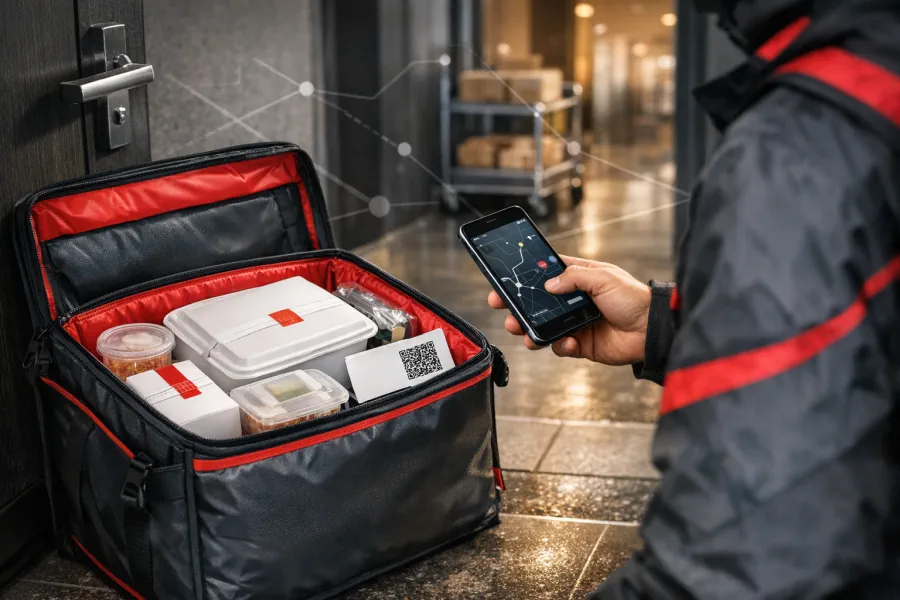
Innovation has always been a unique response to an issue, a process that stumbles upon a solution to a problem. However, as innovation becomes a discipline as well as a trend, businesses have no choice but to have a systematic and scientific handling of the innovation process across all parts of the business. With a constantly evolving market covering a vast range of tastes, markets that pose new challenges on a daily basis, mandates on sustainability, and constantly changing rules and regulations, F&B companies must make use of innovation management as the sole driver of growth in a rapidly changing market ecosystem. Whatever the reason, innovation management is a must in the F&B industry.
The innovations in F&B tend to occur in different areas and because of different incentives.
- Innovations in the food itself, which include functional foods and beverages, cultivated meat or cell-based meat, and innovations to make the food appeal to certain customers such as vegetarians, vegans, and consumers with concerns over the ethical production of food.
- Innovations in the service, which cover Modern POS systems, contactless payments, and innovative packaging.
- And Innovations in management such as data-driven decision-making, data analytics, food waste reduction, upcycling, and food systems transformation.
Now let’s look at different aspects of innovation management in the F&B industry and analyze the findings and the incentives in detail.
Why Innovation Management is Crucial for F&B Survival and Growth
There are several reasons why innovation must be an inherent component of the F&B business and the major one is competition. In a dense market, companies always have to come up with innovative ideas to stay ahead of competition.
Another major reason is diversity; as companies diversify into other global markets, they are faced with a multitude of novel factors – different cultures, new tastes, new regulations and so on. This is where innovations in the products and other aspects of the business become a necessity.
A major factor driving innovation is efficiency. Studies and observations alike indicate that innovation has a direct impact on efficiency and better efficiency means fewer costs and better sales.
There are several other facets to innovation management in the F&B industry, as well.
-
Responding to Rapidly Changing Consumer Demands
The world we are living in is becoming more and more atomized; everyday there are new trends which create new tastes which will, in turn, get new names. Right now, the market is almost dominated by consumers who are health-conscious, ask for eco-friendly products, and those who care about their gut health and are asking for functional foods specifically tailored to their conditions. Therefore, and in response to these demands, companies must be innovative with their food production, the ingredients, and with how they present their image to the public.
Right now, many companies are using precision fermentation, where microorganisms are engineered to produce an animal protein or fat which is quite similar to the real one in taste and texture. This way, it is highly likely that all milk will be produced this way in the future without the need for actual cows. Using precision fermentation, it is also possible to have synthetic eggs, as well; ones which are not laid by real chickens.
With all these possibilities, food could be completely animal-free in the future!
-
Navigating Supply Chain Volatility and Resilience
Studies conducted in 2025 have found that supply chain volatility – fluctuations and disruptions in the supply and price of goods – is a major obstacle for F&B companies. In order to mitigate risks and build a resilient supply chain, companies are resorting to innovative solutions in data analytics and data integration to predict supply and demand fluctuations and deliver the correct product to the right customer.
To have a resilient supply chain that survives the interruptions, disruptions, and fluctuations in the market, businesses need to create a perfect combination of agility, visibility, collaboration, and sustainability; a mix which is better done with the use of smart technology.
Statistics released by the World Economic Forum indicates that 45% of supply chain leaders do not have visibility over their primary suppliers. This lack of visibility hinders the smooth operation of the supply chain and makes it hard to predict fluctuation in the market. Companies must invest in advanced technologies such as AI and IoT to streamline operations and increase visibility throughout the products’ lifecycle.
Agility is another crucial factor when building supply chain resilience; therefore, companies must try and boost their agility through collaboration and communication. Yet again, smart technology plays a significant role in agility, as well. Agile companies make quicker decisions about the sourcing of their products and whether the production must be localized or distributed, which is impossible without fast sharing of information and data; something which can only be offered by advanced digital technology.
-
The Mandate for Sustainability and Ethical Sourcing
Climate change and environmental issues endangering the planet is already transforming almost all businesses. Today’s consumers are no similar to the past and they ask for transparency and proof that businesses are not harming the planet. Numerous surveys show that a big percentage of young customers are buying products that are eco-friendly and those produced through green practices.
To respond to such demands, companies in the F&B sector have no choice but to opt for sustainable practices, that is, to go for practices which reduce their environmental footprint. To meet this demand, F&B businesses must try and implement sustainable practices in their sourcing, increase energy efficiency, reduce food waste, and promote less resource-intensive production procedures. For instance, in order to boost waste reduction, these companies must adopt a circular economy model, where recycling and reusing are core values.
In the wake of an increase in the number of conscious consumers, F&B companies must also ensure the labor involved in their production includes fair practices. Consumers must also be convinced that there are safe working conditions throughout the supply chain. Therefore, transparency is of crucial importance.
Key Innovation Trends Driving F&B Transformation
On another level of transformation, food companies are reshaping how food is developed, produced, and delivered, using innovative trends science has put at their disposal.
-
The Alternative Protein Revolution
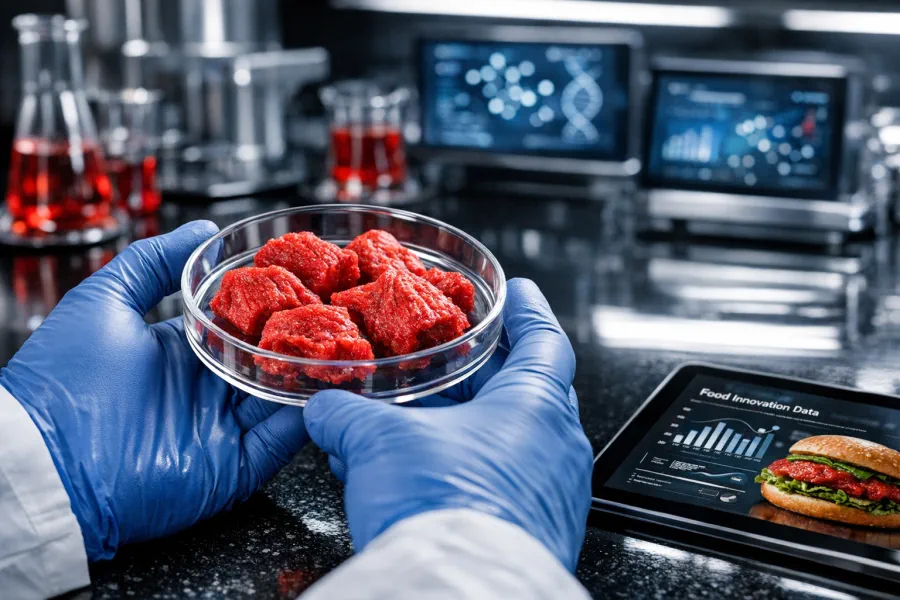
One of the most transformational trends is cultivated meat, which is meat produced by cellular agriculture instead of livestock farming. By growing meat directly from animal cells, this approach will be much more efficient in terms of land use, greenhouse gas emissions, and ethical concerns over animal agriculture.
Another revolutionary breakthrough is precision fermentation, which uses microorganisms to produce functional ingredients such as proteins, fats, enzymes, and flavor compounds. This technology rids F&B companies from using animals in the production of dairy products and helps them create novel ingredients that used to be expensive and difficult to source.
Plant-based proteins are another transformational development brought about by ingredient science and processing technologies. Such developments enable the creation of plant-based products that are closest in texture and taste to their animal counterparts.
These innovative trends are reshaping the F&B industry, making it align better with technological ambitions and consumer insights.
-
Digitalizing the Customer Experience and Operations
Digitalization is always a major component of any business transformation in modern days and the F&B sector is using it to reshape both customer engagement and operational efficiency.
One of the most impactful changes in this regard is the use of AI for menu recommendations. By analyzing the customers’ preferences, purchase history, their location, and through the use of time-based data, AI-powered systems can offer highly personalized menu suggestions across all food-ordering platforms. AI can also help predict sales patterns more accurately and forecast demands in a particular market. Such use of AI can improve inventory planning and it can greatly reduce waste.
Robotics is another transformational development in the F&B industry. The use of robots in food preparation, food packaging, and food delivery is becoming more and more common in food stations and restaurants. The use of robots can standardize output, improve hygiene, and address labor shortages, offering F&B companies new opportunities where there are defects.
The expansion of e-commerce has provided companies with novel opportunities in their effort to gear towards future. From mobile apps and virtual food delivery systems to third-party delivery marketplaces and direct-to-consumer platforms, F&B businesses are using e-commerce strategies to reshape their business into a concept more compatible with the future of the food business.
Finally, cloud-based kitchens – also known as ghost or virtual kitchens – are redefining the food service. These kitchens are basically food stations or restaurants without their physical part; there is no physical station where customers come and go and no tables, cutlery, or glassware. By operating such deliver-only kitchens, companies reduce their use of land, test new concepts, and they can also enter new markets more quickly.
-
Hyper-Personalization and Functional Foods
Today’s customers are more and more looking for personalized experiences; dining experiences that are specifically tailored to their needs and taste. Personalization has always been in place but hyper-personalization takes it to another level. From tailored food products based on the customer’s taste profiles and dietary requirements to personalized nutritional plans specifically designed for the person’s health requirements, and even marketing messages individualized for the specific person based on an analysis of their behavior, hyper-personalization is turning the eating experience into something uniquely personal.
Functional foods are another concept in the innovative trends transforming the F&B business. Functional foods are foods that have added health benefits – that is, foods or beverages which contain substances or live microorganisms that have possible health benefits, adding to the nutritional value of that specific food or beverage. Foods fortified with added vitamins, fruits enriched by nutrients, and beverages fortified with anti-oxidants are some examples of functional foods.
-
Advanced Packaging and Traceability
Packaging has not been exempted from innovative transformations. In sustainable packaging, biodegradable materials are used to reduce the company’s footprint. companies also use recycled and eco-friendly materials in their packaging as part of their sustainable procedures. Other areas of innovation in packaging include:
- The use of sensors to control the inside environment of the package
- IoT pixels which collect transit data
- NFC-enabled labels which offer recipes, games, or promotions
Traceability is another feature which is transforming the business. Traceability mandates the company to give all the data regarding all the production stages – from the sourcing stage to the final product – to the customer. Consumers must know about all the steps in the supply chain, the production, processing, and distribution of the product. Traceability is a mandate under the EU law at the moment and F&B companies must comply with its sub-clauses.
Companies also hint at traceability on their food packaging as well. Technologies such as blockchain or QR codes are also used for an end-to-end supply chain transparency. Through blockchain technology, all stages of production are documented and customers can navigate through all the information relying on the reliability and transparency of the blockchain. QR codes on the packaging also allow customers to see all the stages of the production and the supply chain with absolute transparency.
-
Implementing A Successful Innovation Management Strategy in F&B
As useful and glamorous as it looks, managing innovation can be a hard task. Innovation is not only about having a novel idea; it is a collaborative effort which requires a system to flourish. Companies must invest in innovation and create a culture within the environment that fosters innovation. Managing innovation in the business also requires a scientific approach – a data-driven approach that regulates and drives innovation in the eco-system. But to begin with, and to make innovation practical, companies must have McKinsey’s Three horizons of Growth as their guideline.

-
The Three horizons of F&B Innovation
McKinsey’s ‘three horizons of growth’ offers a framework for companies to navigate their growth both at the current time and in the future.
The first horizon entails focusing on the current business and on defending the core business.
The second horizon emphasizes a set of emerging opportunities that have a potential to be developed into profitable initiatives.
And the third horizon looks ahead and focuses on opportunities in the horizon that are not yet clear but can be achieved in a visionary way of thinking.
-
Cultivating a Data-Driven Innovation Culture
Innovation management is a data-driven science and to make use of its results, companies must have a data-driven approach. Keeping the three horizons in mind, F&B companies must use Big Data and data analytics to first identify unmet consumer needs. Once the consumer needs are identified, companies must act upon them and create concepts. The next step is to validate concepts early – time is of utmost value in competition. Concepts will then turn into products and the next horizon businesses must have in mind is to make sure that this data-driven approach will reduce the risk of new product failures.
-
Leveraging Open Innovation and Partnerships
Implementing successful innovation management in the F&B industry depends heavily on open innovation and strategic partnerships. By opening their innovation ecosystems, F&B companies can reduce risk, accelerate learning, and bring novel and unique products to the market at a faster pace.
Successful innovation management is almost impossible without modern technology. Therefore, a key aspect of this approach is collaborating with food startups, universities, and ingredient suppliers to access new technologies and speed up R&D. Startups often bring agility, new ideas, and cutting-edge technologies, which greatly contribute to the innovation ecosystem of the company. Universities often bring expertise, pilot facilities, and early research findings that can be translated into commercial applications. Meanwhile, ingredient suppliers play a critical role by co-developing customized formulations, functional ingredients, and scalable solutions compatible with regulations and quality standards.
Conclusion
In a highly competitive market and especially when F&B companies are scaling for globalization, innovation management becomes a must in driving the company towards growth. Beside all its other benefits, innovation management can boost efficiency, something of crucial importance when the company diversifies into other markets. The other driver of growth which mandates companies to have successful innovation management is the rapidly changing consumer demands; today’s consumers have diverse tastes. From unique tastes and special health requirements to asking for eco-friendly products and ethical work conditions, consumer tastes cover a vast range.
Meeting all these challenges requires a scientific and data-driven approach on the part of the companies in the F&B sector. Companies must strategize their approach using the latest findings in the data science to meet the unique challenges the market throws at them.
As much difficult and challenging as it might look, the future of the food industry is glamorous as gloomy. All the advancements in the ingredient science including functional foods, cultivated meat, plant-based proteins, precision fermentation, and so on, can give us a glimpse of what we will see on dining tables in near future, and both companies and people must be geared for these innovative experiences of the future.
FAQs
What is innovation management in the F&B Industry?
In short, innovation management in the F&B industry is using innovative ideas to develop new products, managing and scaling new business models, using new technologies for the production process, and on the whole – managing innovation in a structured and scientific way in order to meet consumer needs, improve sustainability, and maintain competitiveness in a rapidly changing market.
What are the biggest challenges for F&B innovation?
Top challenges include regulatory complexity, supply chain volatility, scalability issues, and aligning innovation with consumer expectations.
How is AI changing the food and beverage industry?
AI has enabled Personalized menu recommendations, demand forecasting, product formulation, quality control, and supply chain optimization, helping F&B companies reduce waste, improve efficiency, and enhance customer experience.
What are examples of sustainable innovation in F&B?
Examples include plant-based proteins, cultivated meat, precision fermentation, upcycled ingredients, water- and energy-efficient processing, recyclable packaging, and digital tools that reduce food waste.
What is the three horizons model in F&B innovation?
The three horizons model balances innovation across short-term improvements (core products), mid-term growth initiatives (new categories), and long-term cutting-edge innovations (breakthrough technologies shaping the future).