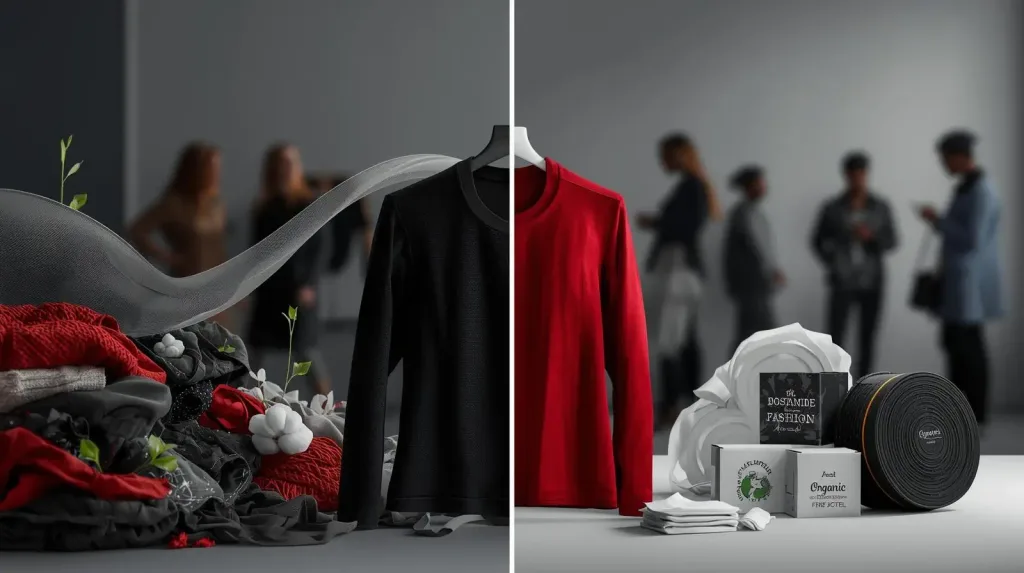
In the wake of the current environmental crises the planet is facing, companies have started to pursue strategic solutions that would make sustainability their core principle. For a long, the fashion industry has been blamed for its negative impact on the environment and its negligence of modern eco-friendly values. However, this is all changing and the fashion business is on the brink of a profound transformation under the pressure of the public, the stakeholders, and governments’ regulatory operations. The business owners in this sector are pushed towards adopting strategies that care about the conservation of the planet’s resources, respect people and biodiversity, and ones which maintain sustainability in business practices.
Despite this pressure, the shifting trends in the market could be in favor of this move towards sustainability. Global reports indicate that there is increasing demand for sustainable and eco-friendly products coming from younger generations, putting pressure on business owners in this sector to go towards sustainability at a faster pace. Figures show that an estimated 73% of millennials and 75% of Gen Z consumers are willing to pay more for products that have fewer environmental footprints. According to a report by Coherent Market Insight, the sustainable fashion market is going to grow from its roughly $825 billion size in 2023 to around $1558 billion in 2030. Therefore, in order to respond to such demands and to be able to compete, market leaders are making great efforts and spending huge amounts of money to manufacture products that have less environmental impact, are more efficient in terms of energy consumption, and ones which reduce waste.
However, going ‘green’ is one thing but keeping the business profitable is another; or is it? As hard as it may seem, successful business owners are making use of innovation management techniques, innovative technology, and modern BMs, in order to keep both tied together – that is, to manufacture sustainable products which also sell well. This is not far from the truth as many apparel companies have ensured their profit in the past years, using innovative ways of production and business models.
The Imperative for Change: Why Is Innovation Non-negotiable?
Fast Fashion and Its Costs
For a long, a trend called ‘fast fashion’ was the driving force of the market – a retail trend that focuses on fast production of clothes at very low prices and in ultra-vast numbers, but with low quality. Highly popular in the last decades of the 20th century, this business model gets the clothing products to consumers at super-fast speeds, tremendously increasing apparel consumption, and at the same horrifically increasing waste production, not to mention other environmental problems it creates. Being a perfect response to a consumerist society, fast fashion is responsible for the vast number of garments that end up in landfills all the time (one in every 5 according to estimates). It is also a great contributor to greenhouse gases in the Earth’s atmosphere; reports indicate that the apparel industry is responsible for the 1.2 billion tons of these gases released into the air annually.

However, in the light of concerns over environmental issues, many producers are turning to innovative ways to reduce the industry’s footprints and to thrive in the market. Innovative solutions such as circular business models, New Product Development (NPD), integration of digital technologies, along with modern breakthroughs in material science are all making sustainability more likely than before.
Shifting Consumer Demands
Despite the fact that numerous surveys show that younger generations tend to go for eco-friendly products, other surveys indicate that the overall shift towards sustainable products is somewhat slow. Then there is the gap between consumer attitudes and behaviors, which is commonly referred to as “Attitude-Behavior Gap”. This phenomenon is when consumers hold an attitude but they might not act upon it. They might believe they have to go green but they will grab the first item that looks attractive to them in the store, regardless of how green that product would be. It so happens that the consumer cares about sustainable values but they are in trouble translating those values into action, and this is where the industry must act upon.
The reasons for this gap between attitude and behavior can cover a wide range, from simply a lack of the availability of eco-friendly products and limited budgets to weak ethical alternatives, social obligations and so on.
The industry, on the other hand, is responding to this gap with a variety of innovative tactics. Some companies are using marketing techniques to influence consumers’ ethical behavior and how they shop. These techniques focus on the ways habits are formed and by psychologically modifying them through advertising and marketing, they can affect the shopping choices that consumers make. The industry has also responded to this gap by manufacturing more durable products and better-quality garments to encourage the consumers to go for eco-friendly products. Other manufacturers are trying to make the products more attractive to the eye. Whatever the tactic, innovation plays a crucial role in sustainable fashion.
Regulatory and Investor Pressure
Another force driving the industry towards sustainability is the rules and regulations. As of recent decades, and under the pressure of public opinions, governments have stepped in to regulate the fashion market and turn into an industry less dangerous for the planet. There are limits put on certain aspects of the business and the manufacturing process, forcing it towards producing greener products. Investors are also reported to be inclined towards businesses that are more eco-friendly.
Revolutionizing The Value Chain: The Pillars of Sustainable Innovation
To adapt to such circumstances, forward-thinking business leaders in the fashion industry are relying on solutions that transform the business and at the same time guarantee the profit as well.
Material Science Breakthroughs: Rethinking the Fiber
The use of sustainable textile materials is becoming more and more common and this is due to breakthroughs in material science. Manufactures are turning to bio-degradable and recycled fabrics such as organic cotton, hemp, and recycled polyester. There are also some fabrics which have always been in use but they are gaining more popularity as they are already sustainable; linen, for instance, is one of such materials.
Manufacturers are also relying on modern technology to synthesize new fabrics which are more sustainable; Piñatex is a relatively new fabric that is made from pineapple leaf fiber – a fabric similar to leather in texture which can rid the market from animal leather products.
Another example of fabrics becoming more popular is Modal. It is an ultimately soft fabric made of wood pulp and has been traditionally used to make underwear.
Other than these, companies are using innovative techniques to create fabric out of waste. Econyl is one of such fabrics which can replace virgin nylon, and it is completely made from consumer waste.
Digital Transformation for Green Operations
Working hand-in-hand with technology, digital innovations are helping businesses on their journey towards sustainability.
ERP software, a type of enterprise resource planning software specific to the apparel industry, is making cost-effective changes possible in the business. For instance, such software can streamline all the processes across the apparel supply chain, covering all the stages from the design phase all the way to distribution.
AI is a very powerful tool that can greatly increase efficiency while transformation is under way in the business.
The Circular Economy Model: Closing the Loop
A circular business model is a model that focuses on reducing waste and increasing the lifecycle of products. Common practices in such a model are recycling, reusing, and refurbishing. Instead of following a traditional linear model – that is, take, make, and dispose, a circular model seeks to keep products in use as long as possible. Therefore, companies in the fashion industry are focusing on longevity and durability, which are inherent features of ‘slow fashion’. Along with longevity, companies are also manufacturing garments that are modular – that is, they can be disassembled once they are fully used by the consumer.
Companies are also using re-commerce tactics, preparing the grounds for Rental, Resale, and Repair, which are the major features of re-commerce. These companies are creating platforms for their brands where consumers can repair, resell, or rent their garments. This way, not only are these businesses moving towards sustainability but they create an opportunity to still own their brand once the consumer lifecycle is over. Techniques such as modularity, resale, rental, and repair are all different facets ‘timelessness’ – a quality that companies are trying to bestow upon their products through such practices.
Another giant step towards sustainability, incorporated in the circular business model, is the practice of advanced recycling. In such methods, innovations in chemical and mechanical recycling allow the recycling of blended materials, returning them to the raw material state and quality.
From Strategy to Success: Making Sustainability Profitable
Ridding a business from old habits and previous business models is a hard task – partnerships have been made, markets have been targeted, and your customers are used to the model, as well; however, when there is a will, there is a way, especially under the pressures of the market, the rules and regulations and the investors. First and foremost, circular models of business have good potential for profitability if practiced effectively. Many companies adopt a circular model but forget about the long-term goals of the business and, therefore, suffer loss.
Implementing re-commerce components must also be modified according to each business’s unique features. Repair, resale and rental must each be customized according to the type of business and the type of product. For example, a resale strategy might not be suitable for intimates, and a repair strategy will not work for stockings or socks.
The business Case for Innovation
As glamorous as it may seem, innovations alone are not profitable. Innovation must be at the service of the overall business goals and that’s why innovation management matters. However, ideas that are aligned with the objectives and make a safe journey to implementation will definitely bring profit to the business.
In the sustainable fashion industry, circular models extend product lifecycles and generate continuous revenue from the same item. These models also decrease dependence on resource-intensive raw materials, which will, in turn, reduce long-term expenses.
Digital innovation increases and enhances customer engagement through tools such as virtual try-ons and AI-driven personalization. This reduces returns, increases conversion rates, and enhances the overall shopping experience.
Overall, as innovation can make a business operate more efficiently, it can help it stand out in the market and build customer loyalty, which will lead to profitability in the long run.
Transparency and Traceability
To appeal to today’s concerned consumers, companies must be ever more transparent about their sustainability practices. Transparency and traceability are both crucial in the sustainable fashion industry.
Companies must be transparent about their operations and must make sure their customers know about all aspects of the business and that there is no aspect that harms the environment in a serious way. The information shared with the customers must include the working conditions in the factories, the use of chemicals, the overall footprint, and must include demos of the production processes.
Brands must provide information that allows the consumers to trace the production process all the way back to raw materials, proving that the products are made ethnically and sustainably.
Authentic Storytelling
The way brands create narratives is of great importance, as well. The narrative they choose to share with the consumers must convince the customers that the company’s efforts towards sustainability are authentic and sincere. Effective narratives can humanize the brand and help environmentally-conscious consumers relate to and trust it.
Conclusion
The fashion industry is on the brink of a huge transformation. With rising concerns over environmental issues and global climate crisis, businesses in the fashion sector have almost no choice but to move towards sustainability. They must go for more sustainable materials and fabrics, monitor their footprint, and pick more environmentally friendly practices. Innovation is also helping this transformation along the way; breakthroughs in material science, circular business models, innovations in recycling, slow fashion, and components of re-commerce come handy on this journey of ethnicity and sustainability. The world is becoming more conscious about the planet we are living on, and fashion must respond to this trend by convincing consumers that it cares about the environment. No one wants to walk around on a planet in clothes that he knows have harmed the eco-system of that planet, after all.
FAQs
Q: What is the biggest barrier to achieving a sustainable and profitable fashion business?
There several challenges when a brand tries to go green, but the most common ones could be:
- the higher cost of eco-friendly raw materials
- Social media’s encouragement of fast fashion
- Reducing carbon footprint
- Outsourcing of environmental responsibility
- Hiring skilled labor
Q: How does AI make a fashion brand more sustainable?
- AI assists brands in their sustainability endeavor in many different ways; namely:
- AI helps brands to choose the fabrics by analyzing their environmental impact, recyclability and their carbon footprint.
- AI-powered tools allow digital garment prototyping, letting designers test colors and textures without any physical touch.
- AI also enhances supply chain transparency by predicting material needs, tracking shipments, and detecting efficiencies.